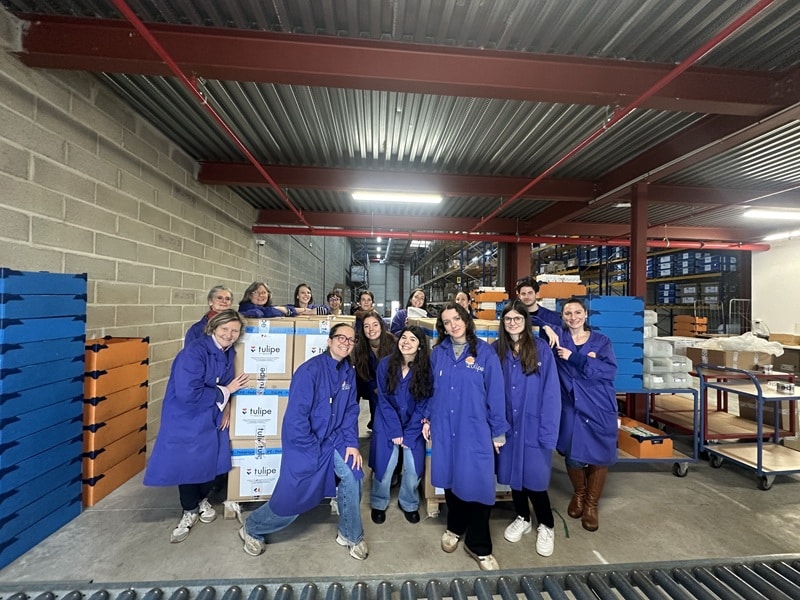
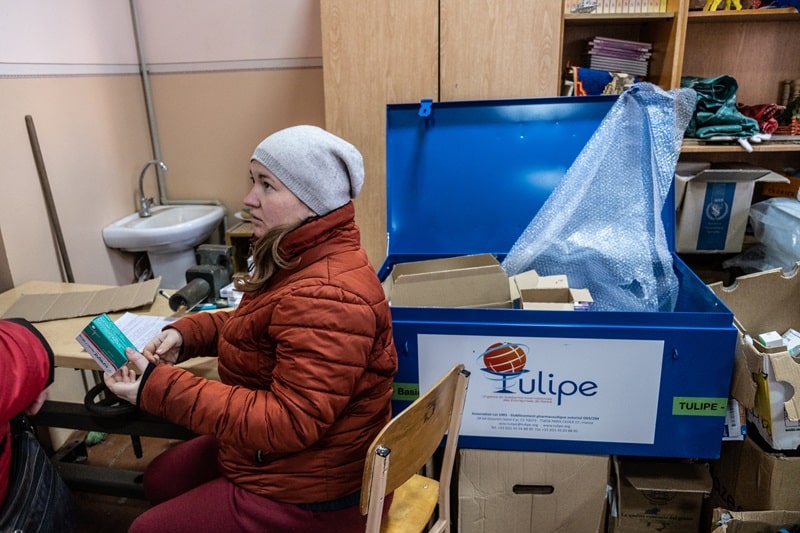
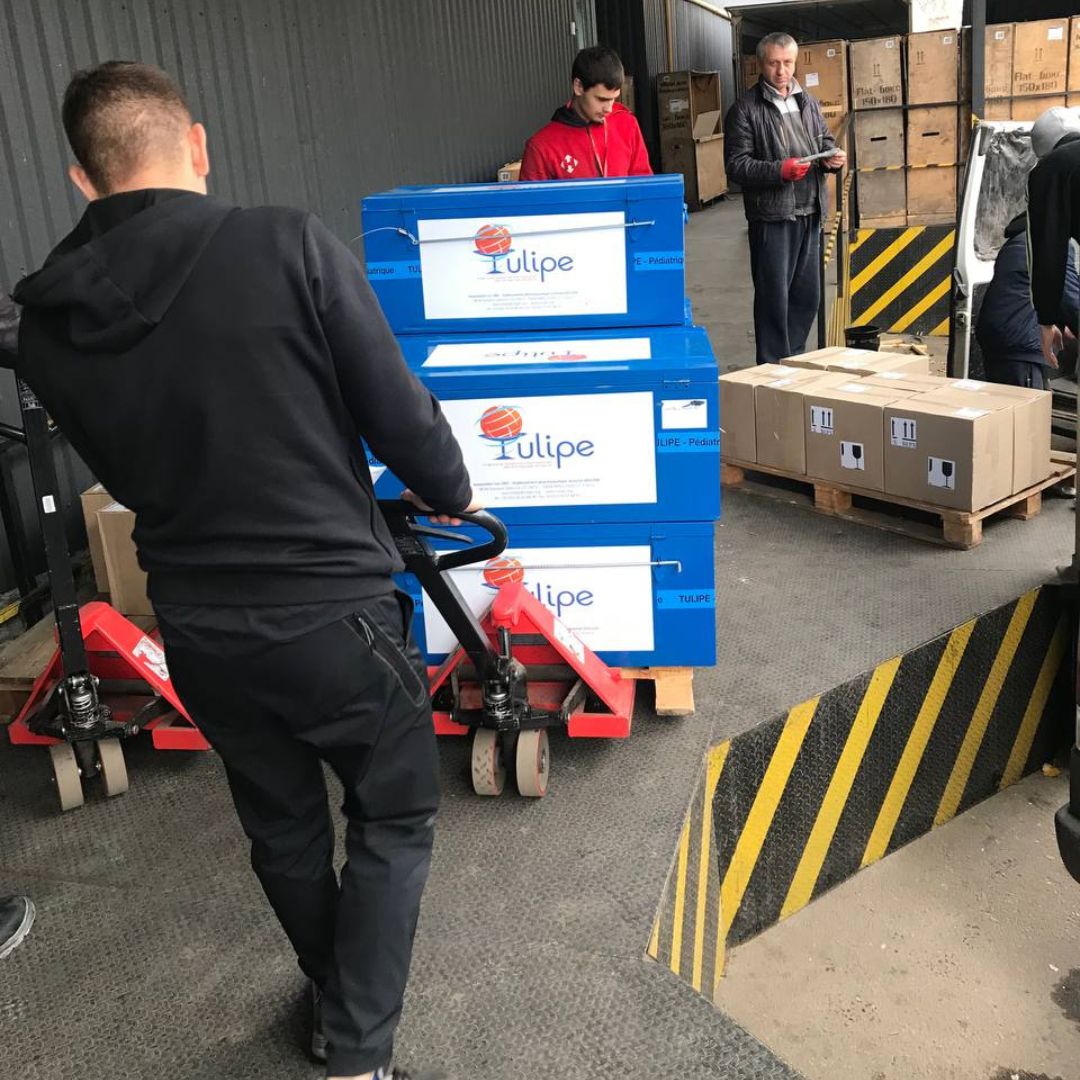
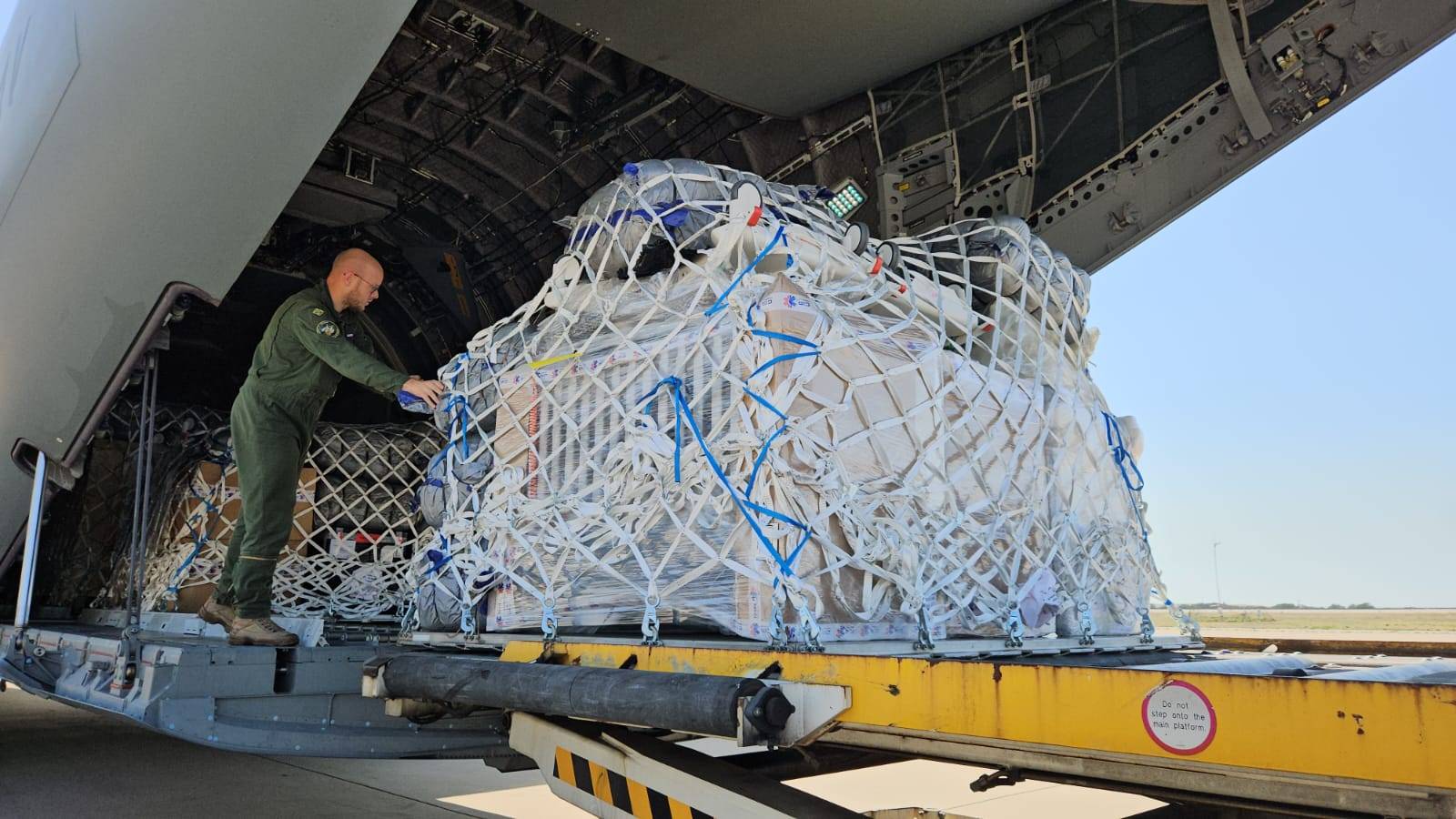
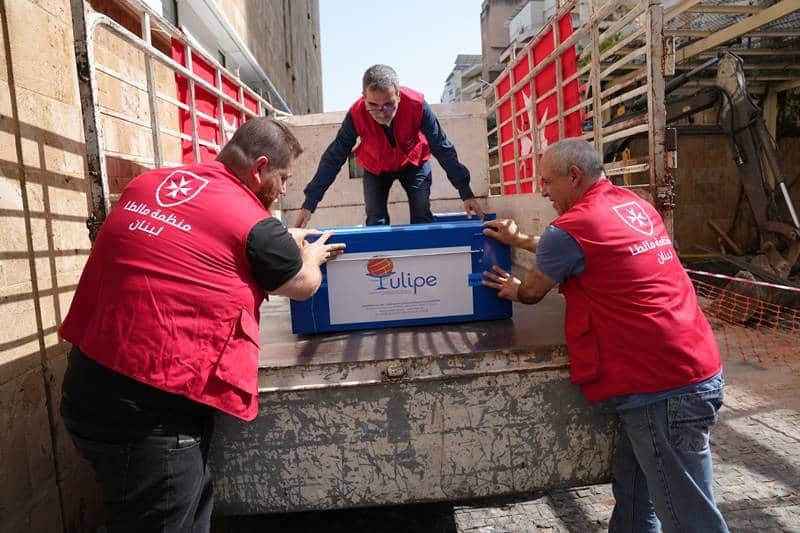
To launch its Tulipe chez l’adhérent series, Tulipe chose to highlight what usually remains out of sight: not only the donated products themselves, or even their departure for the field, but all the upstream work that turns a donation into useful, safe and traceable support. Filmed with the teams from Foundation S – The Sanofi Collective and Sanofi, this first episode sheds light on a simple reality: behind every donation lies a chain of expertise and solidarity serving the most vulnerable patients, wherever they are in the world.
Where the donation process begins
In the opening sequence, Alexandre Laridan, Managing Director of Tulipe, sets the tone. The purpose of the day is to explain, as closely as possible to the teams involved, how Tulipe works with Sanofi’s donations. In other words, to go back to the starting point: where a product is identified, assessed, documented and then directed into an appropriate humanitarian channel.
The relationship between Tulipe, Sanofi and Foundation S is not a one-off collaboration. Sanofi has supported Tulipe since the association was founded in 1982. Since the launch of Foundation S in May 2022, Sanofi’s philanthropic foundation has supported several major Tulipe operations, notably in Ukraine, Lebanon, and in Turkey and Syria following the 2023 earthquakes.
The first filter: rigor
Zara Ouassou, Export Coordinator at Sanofi, describes highly rigorous work at the crossroads of logistics, compliance and documentation. Product availability, receiving capacity, certificates of analysis, export paperwork: her contribution is a reminder that a donation of health products never begins with shipment alone. It begins with qualification. A medical product must be mobilised under the right conditions, with the appropriate level of traceability, at the right time and for the right recipient. That is precisely what Foundation S aims to structure through its humanitarian programme, which it presents as a more cross-functional and proactive donation strategy, developed in partnership with a network that explicitly includes Tulipe.
“Helping vulnerable populations and people in need”
With Chloé Renoux, Regional Export Manager at Sanofi, the perspective broadens. Responsible for a scope that notably includes Africa, certain North American markets and NGOs, she explains that these donations serve a very concrete purpose: “helping vulnerable populations and people in need.” That objective lies at the heart of both Tulipe’s and Foundation S’s mission: access to treatment.
This link between industrial expertise and humanitarian purpose is central to Foundation S’s positioning. The foundation states that it works on humanitarian aid and medicine donations, access to treatment for certain rare diseases, and strengthening healthcare capacity in fragile contexts. Since its launch, it says it has reached 29 million people, including 25 million through its humanitarian work.
“An essential link between us and the patient”
Aurélien Hubert, Head of Emergency Responses and Operations at Foundation S – The Sanofi Collective, probably expresses Tulipe’s role within this system most clearly. Tulipe, he says, is “an essential link between us and the patient.” This is not just a conventional institutional phrase. It accurately sums up Tulipe’s role: to receive, secure, direct and make health product donations operational in contexts where everything becomes more complex, from regulation to delivery.
This role as a qualified intermediary is all the more important because Foundation S openly promotes a collective approach. In its official materials, the foundation names Tulipe among its key humanitarian partners, alongside international organisations and specialised medical donation actors. The logic is clear: to extend the impact of direct relief by relying on partners capable of turning a company’s commitment into a credible field response.
Products identified, not simply “offloaded”
The sequence featuring Sébastien Onillon, Head Supply Chain General Medicine – Established Products and Oncology at Sanofi, is especially valuable because it addresses something many prefer to leave vague. Yes, some donations come from surplus stock, discontinued products or products that can no longer be reallocated elsewhere. But that does not mean such products are automatically redirected to humanitarian aid. “Before any proposal is made, the remaining shelf life, the integrity of the packaging, the compliance of the product and its ability to be used under the right conditions must all be checked,” he explains.
Pharmaceutical donation is not a matter of stock clearance. It is a chain of decisions. Aurélien Hubert makes this point very clearly when he says these operations “require expertise at every level”: supply chain expertise to identify products that can be mobilised, foundation expertise to coordinate, assess and verify regulatory aspects, and finally Tulipe’s expertise to direct products “towards the populations that need them most.”
A partnership that goes beyond one-off operations
What makes this episode particularly strong is that it documents, without overstating it, an already established working relationship between Foundation S and Tulipe, built through both concrete operations and a shared vision of humanitarian medical aid. In 2023, both organisations were among the partners of the PQMD Global Health Policy Forum in Paris, an event focused on improving access to healthcare in areas affected by crises, conflict and natural disasters.
This first episode makes one thing clear: before reaching an NGO partner and then patients, a donation of health products passes through a precise chain of selection, verification and coordination. It is this collective work, carried out by the teams at Sanofi, Foundation S and Tulipe, that makes it possible to turn available products into medical aid that can genuinely be mobilised in the field. That is exactly what the Tulipe chez l’adhérent series sets out to make visible.